Sunday, August 26, 2007

Sibling Loss, My Daughter Remembers Her Brother

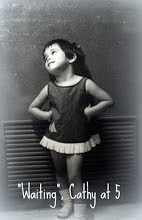
The following essay was written by my daughter P, four years ago when she was 12 years old. I am inspired to post it here after she showed me a self-portrait that she took of herself last night, the one pictured above here. Loss early in life really imbues you with a sense of wisdom far beyond your years. It also puts into your heart a sense of sadness that will forever be there. Re-reading this again today I was struck at how vivid the images of our experiences as a family really stuck to head. P knew loss at the tender age of seven when we lost Migi in 1998. A child's grief is cyclical in the sense that it appears at every point in the various developmental stages. Perhaps now as a teen-ager her way of working it out is through photography. Perhaps it also had to do with her coming from a retreat that put her in a reflective mood. She called the photograph above "Seeking Migi For Inspiration" as she journaled her thoughts away. Below is P's essay which hangs in frame over my work table.


"All I Needed To Learn In Life... I Learned From My Younger Brothers"

Being an ate is hard work.

I should know, I was born into a family with two younger brothers. Older sisters often regard their younger siblings as pests, annoyances or simply those little brothers that you want to bite when you're "naiinis" or frustrated. Being an ate myself I won't deny the fact that yes, my brothers can frustrate me sometimes. They too can be a total monster. But I don't focus on that. When they make me mad, I just remember all the good times we've had together, the lessons they've taught me and the lessons they are still teaching me as the days pass. I've learned everything I need to know from them and they've taught me in the most unique ways.

My first younger brother Migi was born three years after me in 1994. He was born with a heart disease called Tetralogy of Fallot. Living with a brother with a disease taught me that I should accept people's diseases or differences. I understood that some people are just born with special needs or differences and that I should learn to respect them. I remember that he taught me how to share. We used to share everything! We shared books, toys, and even the same room. Most importantly we were able to share the advantage of being blessed to be raised by great parents, together.


Another important virtue that I learned from him was to be patient. As a child I remember some days when we would play and he would get too tired, his lips would turn blue, he'd turn pale and he would have to be placed in front of an air conditioner or an electric fan while being rocked back and forth by our mom. I never really complained when this happened, I understood that I had to be patient and wait until he was all right again. I realized that my baby brother had special needs. Until today, even if I know that God has called him home, I will never forget my Migi, the brother I had who taught me so much, without realizing he did. He is always on my mind.


Then came Leon. He came into mylife just three months after Migi became an angel. Leon seemed just somuch like a sign of Migi saying "Ate you've got to move on now." Now, I am old enough to understand that God had to take my Migi but he also sent me little Leon to help me move on, keep living my life. So much like the saying, "When God closes a door, he opens a window." I totally dote on Leon. He is now a happy and robust 5 year old who teaches me more lessons and reminds me of those little values and good doings I tend to forget. He's got just about the greatest concience. He is the first one to reprimand me if I do something wrong. And when I've made a mistake, he always tells me that it's okay to lose and that I can just try again. He really does! He also reminds me of even the most unique of things, especially not t o have a boyfriend yet! He says his reason is that when I'd get one, his heart would hurt. Leon is very intelligent for his age and really takes whatever he learns in school very seriously. Especially those good things they tell you that you should do in kindergarten. Lately he has been reminding me that I should always eat fruits and vegetabled. He is ever so sweet and has so much compassion for others. The other day he told me, "Ate this Christmas we've got to help poor people." Leon really doesn't realize how much he teaches others just by being his usual perky 5-year old self.

A lot of people have commented that I'm a "goody-goody". I really don't mind being called such because it makes me realize that I have been blessed to have grown up in such a stable family. My family is supportive and very willing to accept me for who I am. They have created who I am today. My brothers have been my biggest inspiration throughout my grade school years and I really haven't been through an English teacher yet who doesn't know about my brothers. This is the first time though that I've written about how much they really mean to me. Through this, I want to thank them, Migi up in heaven who I know may even have been with me the whole time I wrote this, and sweet Leon who is my remaining little boy. I just want them to someday know how much they mean to me. I want just the best for them. But no matter what happens, whether they find out or not and whatever may happen during our lives, my brothers will always be the world to me.

P.B. G. December 10, 2003

Wednesday, July 25, 2007

Griefshare Ministry on the 700 Club


This day has been quite a long but terribly blessed one.

The day began with H and I guesting on "The 700 Club" to talk about our Griefshare Ministry. What was particularly poignant was when they showed us a clip of an interview I had done for them back in 2000 when there were only two, going on three Migi's Corners. I had very short hair on the video and P was a chubby nine year old while L was a precocious two. I couldn't help but tear when then-little P talked about her two brothers - "My younger brother is totally different from my older brother in many ways... and he's not a replacement for my older brother." So wise even at such a young age.

How much our lives have changed since then. Now, there are 12 Migi's Corners all over the Philippines and H and I now share a common ministry that is Griefshare. As Kata Inocencio, the 700 Club host put it perfectly, from Migi, there came about Migi's Corners for children, and now there is Griefshare for adults and families. Truly the ministry has evolved and continues to change from where it began nine years ago. A decade back, I would not even imagine doing this kind of work. But such are the ways of the Lord, that He is able to transform the worst nightmares of your life into something that will benefit many people. And the projects and ministries have never been about us, but about the saving grace of our Lord, of how He is able to comfort us at the lowest point and give meaning to a very great loss. "All things work together for good to those that love the Lord..." This, we hold on to as we continue to do HIS work for us here on earth.

The episode on Griefshare will air on August 9, 2007, 1130PM on QTV

Sunday, July 15, 2007

Losing Your Parent In Adulthood


This post is for my good friends - Ginny and Glenda whose devotion to their fathers inspired me and for Leah, Carissa and Lia who take wonderful care of their own dads in the best ways that they can.
I came face to face with mortality this week -several times over, in fact.

Last Monday, I received a text message saying that the father of a high school classmate had passed away after a long illness. The following day, I went to the hospital to visit the father of another very good friend from high school. Yesterday, I received an email from another from a childhood friend, saying that her dad’s health had just turned from bad to worse.

At midlife you suddenly become very aware of your mortality when you notice that the death of persons very close to you – parents, grandparents, aunts, uncles, godparents – become more frequent. My sage of an eight-year old put it perfectly yesterday when he said, “You seem to be going to wakes every two weeks now.”

The birth of our children and the death of our parents are miles apart on the journey that is life but they are major events that transform us forever. When you lose a parent, that part of your past is gone forever. When that parent is ill for a long-time, prior to his/her passing, we find the roles reversed, as we become parent and our parent, in all his/her vulnerability, becomes the child.
Alexandra Kennedy, a psychotherapist who specializes in adult grief, wrote the book “Losing A Paren.” after her father’s death. She writes -- “The generation of adults referred to as the "sandwich generation" is simultaneously raising children and caring for aging and dying parents. Many also have full-time jobs. The pressures are immense as these adults, already emotionally overwhelmed, try to attend to the competing needs of parents and children. No matter what they do, someone seems to feel hurt, left out, or resentful. Tied down with responsibilities at home, many members of this generation experience a lack of freedom to respond to their dying parents as they would want to.”
Kennedy explains that a parent’s illness or decline can place a tremendous strain on family life, demanding an exhausting expenditure of time, attention, and money. She stresses that the whole feeling of uncertainty and anxiety is both emotionally and physically, and financially draining.
As a people, we are blessed to have very strong family support systems, and though grief is not as freely discussed, there is more room and openness now for the bereaved to share their feelings in support groups or through one on one sessions with a counselor, priest or pastor. However, because as a people we were not raised to be vocal about what we want and need, many, who belong to the current sandwich generation find themselves taxed and burdened after the death of a parent. It is normal to be drained after a loss – emotionally, physically, and sometimes even financially – but there are steps that one can undertake to get back into the stream of things as one begins the journey towards healing. Here are some things that you can do for yourself as you move on after the loss of your parent :
• Be patient and kind to yourself. The supermom or superdad is a myth. Especially during a time of loss or illness, you do the best you can and leave the rest to God and other family members.
• Grief recovery takes time. Allow yourself to feel vulnerable and go with the flow of your pain for as long as you need to. At one of our recent Griefshare workshops, I was apalled by the story of one of our attendees. This young woman had lost both her parents in a span of three days. A cousin had told her, “I am giving you three months to recover.” Goodness! The woman had just lost her entire history and two beloved parents and she was expected to get back on her feet in the blink of an eye!? There is no set time table for grief and no one can tell you when you should be over your loss. For as long as you remain functional and do not harm yourself or your loved ones go ahead and do your grief work well.
• Take time each day to retreat to a quiet place where you can re-group, meditate, pray, journal, cry or just be with your thoughts. In grief work moments of solitude are essential. Afterward these times of quiet, it becomes easier to get back to the duties of daily living.
• Share your feelings with your children and listen to their concerns about the situation, you, and their grandparents. Children can be wise beyond their years and there is much that we can learn from them about ourselves if we take the time to listen.
• Be as open and express your feelings to as your spouse or partner. I was touched when my friend paid tribute to her husband whom she says was extremely supportive in every sense during her father’s illness. Make your spouse or partner understand that grief takes time, and tell them what you want and need from them.
• In situations where you cannot be with your dying parent, Kennedy suggests that you be creative – write a letter, meditate or pray, talk to your parent through your heart. In your time alone, work on healing the unresolved issues in your relationship.
• Support your other parent in the best way that you can without burning out. Delegate other responsibilities to your children, your siblings and find other possibilities for emotional support of need be eg. Seeking counseling, joining a support group. This is a time when family dynamics are expected to shift, when major family changes are slowly set into place.
• Do something special and pro-active each year to remember your parent with love. Reaching out of one’s grief to help others is one of the best ways to heal. I remember one mentor of mine who was very close to her father who, during his lifetime, was very passionate about basketball. On the anniversary of her father’s death, she, together with her brothers would organize a basketball camp for the street children in their community, the highlight of which would be a tournament in memory of their dad.
One of the key things in grief recovery, whether it be the loss of a parent, a child or a loved one is for the bereaved to be able to move from the wrenching feelings of longing and loneliness for the presence of our departed loved one, into a place where we are able to remember them with joy. “Death is not the end of love”, Mitch Albom wrote in “The Five People That You Meet In Heaven”, simply because, we carry the memory of our loved ones forever safely in our hearts.

This article appeared in my ROOTS and WINGS column in the Philippine Daily Inquirer, July 15, 2007

Friday, June 01, 2007

Nine Years Later, All Is Well

Photo Sharing and Video Hosting at Photobucket

I was all set to go to bed when something told me to open my Migi's Corner email. And true enough, my son who now lives forever with his Father in heaven had a surprise waiting for me...

For those of you reading this who do not know my history, Migi was my four year old son who passed away on June 3, 1998 from complications arising from an open heart surgery. Migi's Corner is the foundation that we set up in his memory. The foundation's mission is to improve and uplift the living conditions of children confined in the charity wards of our government hospitals. The first corner was set up in 1999 on the eve of what would have been his fifth birthday, at the Philippine Heart Center. Todate there are 13 Migi's Corners all over the Philippines.

I digress...

Each year, for many years now, as Migi's angel date approaches, somehow, God always manages to send me a message. This year is no different. As I opened my Migi's Corner email (migiscorner@gmail.com)which I had not opened in he last three months... I was met by an email from a former Theology teacher from Miriam College. Maricel wrote to say that she was now based in Norway and on one of her quiet times, using YouTube (I found this funny when I first read it but hey, never discount God's humor...) she had "stumbled" upon a video that featured Migi's Corner! So she sent me the link of the Migi's Corner Video and I clicked on it. True enough, it was a beautiful MTV of Bukas Palad singer Laine Laudico-Santana singing the lilting and comforting song "All Shall Be Well". The coincidence doesn't stop there, Laine happens to be a very good friend who has been supportive of Migi's Corner all these years. I'm not sure if she forgot to tell me about the video or that she did not know about it since she was not filled at the corner itself. I plan to ask her about it this week-end.

More meaningful though is the message of Laine's song with lyrics by Fr. Johnny Go and Manoling Francisco S.J. especially at this time of the year.

"Broken wings that cannot mend
Are we afraid to dream again?
Our days are full of passing faces
Our hearts are bruised in many places,
Yet all shall be well, shall be well
You'll see all shall soon be well...

I know you'll see through all the pain and sadness
All things, all men, all the world
All shall be well.
Shall be well.

It's not the end, you'll dream again
I know you'll see, believe in ME
All shall soon be well.

When there are no rainbows
after the rain
And there isn't freedom from the pain
I know that in time you will see
Believe in ME, all shall soon be well."

What greater comfort can a mother receive in the days leading to one of the saddest days in her life? Yes, truly God works in comforting and wonderful ways, and on this, Mig's 9th angel date, I can say with much faith, that yes, God is good and all is well.

Please click on the link I provided above, or view the video down here to appreciate the message of the song and why the visuals are so meaningful to me and the work that we have done with Migi's Corner over the last eight years.

Wednesday, April 25, 2007

Coming Full Circle


Personal Testimony delivered at Greenhills Christian Fellowship on April 22, 2007

My husband and I lost our four year old son nine years ago in 1998. Migi, who was then four years old, passed away due to complications from an open heart surgery. The loss of a child is a pain too great for words.

Three months after his death, God blessed us with another son. Because I was recovering from childbirth, I stayed home most home the time to take care of our baby and another daughter who was then seven years old. Out of our family’s loss experience, the Lord brought forth a foundation called Migi’s Corner, a foundation that sets up play corners in government hospitals where children in the charity ward can go to play and read while recovering from illness or surgery.

In 1998, there were no workshops or support groups in the country that catered to bereaved parents like myself. Thus, I would find myself surfing the internet for hours, reading up on grief and recovery. Eventually, I went back to graduate school, took a course on bereavement studies and since 2001 have been teaching a course on grief at the Ateneo de Manila University.

GRIEFSHARE, GCF’s grief ministry was born out of that loss that my family experienced nine years ago. Sometime in June last year, my husband Hector and I approached Pastor RG Foncardas about the possibility of setting up a grief recovery program in GCF. Because we had received so much comfort from the Lord during our grief journey, our family wanted to be able to give back that same comfort to other people who had lost loved ones. And because we knew in our hearts that the Lord is the only one who can pull you out of the darkness that is grief, we wanted to share that with others who had been bereaved as well. The church was most supportive and gave their blessings to support the ministry. We had planned on an October launch for Griefshare.

On August 27 last year, I found myself hovering between life and death when it was discovered that I had an ectopic pregnancy. Thus, in the early morning of August 28, 2007 I had to undergo emergency surgery. Thus, even before Griefshare could begin, our family had experienced another loss.

I could not understand it back then and was searching for God’s message. Now I look back and think that perhaps it was another way to prepare us for the ministry we were about to undertake.

On November 2007, Griefshare was finally launched and our first module “graduated” 12 students who were in varying stages on the grief journey when they first came to attend Griefshare. From that initial batch we had seven bereaved parents, three widows, and two people who had lost either parent or sibling. It is not an easy ministry because it is one that demands you to be involved mind, heart and spirit into the lives of your participants. The greatest joy that my husband and I have found is in watching our participants burdens lift as they come to know the saving grace of our Lord Jesus Christ and when they begin to process and understand their own grief.

The recovery is quite visible in marked in others. Initially they come with such heavy laden hearts and you see it in their eyes, their speech, the way they move, in their manner of dressing. Half--way through the 13-week program, you can see the load become lighter, the smiles return, and they slowly learn to laugh again. They start wearing brighter colored clothing, re-invest their lives in new activities, they learn how to pray and reflect, seek Bible studies and begin to truly trust the Lord once more. God truly gives grace for the healing.

Grief is a process that cannot be rushed and GRIEFSHARE does not guarantee that you will be completely healed from your losses after the 13-week program. When one experiences a death, it is like going through a tunnel, the downside is that it is dark but the upside is that there is a light at the end of it. GRIEFSHARE helps its participants begin walking through that tunnel, showing them what to expect while they are in the darkness and at the same time reminding them that there is nothing to be afraid of in the dark because God is there.

A GRIEFSHARE session is divided into two parts – in the first part, participants view a videos where U.S. grief experts who are Christians themselves talk about the healing journey – Dr. Larry Crabb, Dr. Bill Bright, Elizabeth Elliott, Kay Arthur, Barbara Johnson and participants who have been through the Griefshare workshops themselves. The second part is where we come together in a smaller support group to share what we have learned in the video and share what is going on in our own healing journeys. We always end our sessions with prayer and thanksgiving for what has transpired during that day.

If you know of someone, or you are someone who has lost a loved one through death, I urge you to join GRIEFSHARE and begin your journey towards healing and recovery. We meet here every Saturday afternoon from 2-5PM. Psalm 30 verse 5 says, “Weeping may last for a night, buy joy comes with the morning. Loss always takes place for a reason and pain can be transformative if you embrace it. The Lord has promised to one day turn your mourning into joy. To God be the glory. Thank you very much.